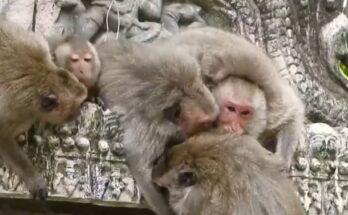
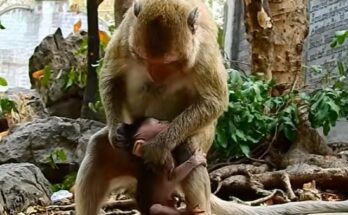
Baby Leo experienced a dramatic and emotional moment today that quickly captured everyone’s attention. During a tense family interaction, little Leo cried loudly as his mother, Libby, appeared to push his head toward the ground. The unexpected scene looked alarming and left nearby monkeys watching closely as the baby expressed his distress with continuous cries.
Young monkeys depend heavily on their mothers for comfort, protection, and guidance. As they grow, mothers sometimes use firm physical actions to correct behavior, encourage movement, or teach important survival skills. While these moments may seem upsetting to observers, they can be a natural part of monkey social behavior. Even so, every interaction should be viewed carefully without assuming unnecessary harm, since brief behaviors do not always reveal the full situation.
Baby Leo’s loud cries showed just how frightened and confused he seemed during the encounter. He repeatedly looked toward his mother, hoping for reassurance while staying close despite the emotional moment. Like many infant monkeys, Leo relies on Libby not only for food but also for safety and emotional security. His reaction highlighted the strong bond that exists between mother and baby, even during challenging situations.
After the tense moment, the family gradually settled down as the surrounding monkeys returned to their normal activities. Leo remained near his mother, showing that despite the frightening experience, he continued seeking her comfort and protection. Such moments remind viewers that family life in monkey troops can include both gentle affection and firm discipline as young monkeys learn how to survive within their social group.
Today’s incident involving Baby Leo and Mom Libby was certainly emotional to witness, with Leo’s heartbreaking cries drawing sympathy from everyone watching. Although the interaction appeared shocking at first glance, it is important to avoid jumping to conclusions based on a single moment. Observing animal behavior with patience and context helps us better understand the complex relationships, parenting styles, and natural social dynamics that shape the daily lives of wild and free-ranging monkeys