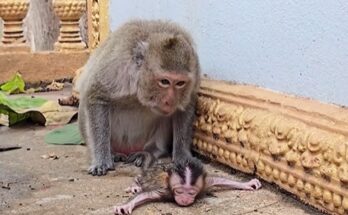
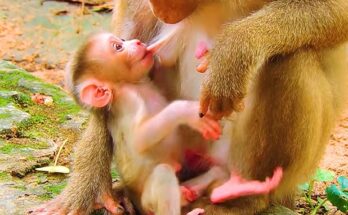
In a quiet corner of the world, a heartbreaking scene unfolds as newborn baby Janet lies restless, her tiny body trembling with hunger. Her soft cries echo with desperation, a natural call for comfort, warmth, and the nourishment only a mother can provide. Janet is too young to understand why her need is not being met; she only knows the deep ache in her stomach and the instinct to seek milk from her mother, Jane.
Jane, however, seems distant and unresponsive. Whether from confusion, stress, illness, or instinctual disruption, her refusal to feed Janet creates a painful gap between mother and child. It is difficult to witness such a moment without feeling a sense of sorrow and helplessness. A newborn depends entirely on its mother for survival, and when that bond is interrupted, the consequences can be severe.
Janet’s tiny hands move weakly as she searches for comfort, her cries growing softer with exhaustion. Each passing moment without milk increases her vulnerability. Hunger for a newborn is not just discomfort—it is a critical need that affects her strength, growth, and chance of survival. The silence from Jane raises many questions. Is she aware of Janet’s suffering? Is she unable to respond, or is something deeper preventing her from nurturing her baby?
This situation reminds us how fragile early life can be and how essential maternal care is during the first days of existence. It also highlights the importance of awareness and intervention when something seems wrong. Whether in humans or animals, a newborn’s cry should never go unanswered for long.
As Janet waits, her fate hangs in uncertainty. Her story is a gentle yet powerful reminder of compassion, responsibility, and the urgent need to protect the most vulnerable lives.