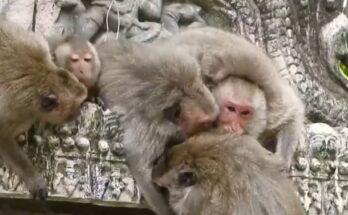
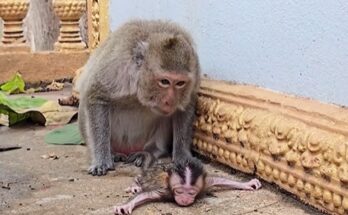
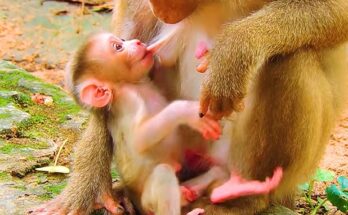
The scene is truly heartbreaking. Little Julina clings tightly, her tiny body trembling as she cries out desperately for milk. Her high-pitched screams echo with pure hunger and confusion, a sound that tugs painfully at the heart. She does not understand why her mother turns away, why the comfort she seeks is suddenly denied. All she knows is the aching emptiness in her belly and the overwhelming need for warmth and nourishment.
Julina reaches again and again, her small hands grasping at her mother, hoping for a response. But the mother refuses, shifting away, showing little interest in feeding her baby. Whether from stress, exhaustion, or natural instinct, the rejection feels cruel to witness. The bond that should provide safety and care now seems distant, leaving Julina alone in her struggle.
Her cries grow louder, more desperate. Tears well in her innocent eyes as she tries to nuzzle closer, searching for even a moment of comfort. Each rejection only deepens her distress. She curls and uncurls her fragile body, unable to settle, driven by hunger and fear.
Watching this moment unfold fills the heart with pity. Julina is so small, so vulnerable, completely dependent on her mother for survival. Without milk, without reassurance, her chances grow uncertain. Yet she does not give up. She continues to call, to reach, to hope.
This painful situation reminds us how delicate life can be, especially for the youngest. Julina’s cries are not just sounds—they are a plea for care, for love, for a chance to live. And as she waits, still calling out, one can only hope that her mother will respond before it is too late.